Hey there! If you’ve just finished the first draft of your novel, congratulations! It’s such a relieving and exciting feeling, finishing the hard work of putting the words on paper (or the screen!) and finally bringing your story into existence.
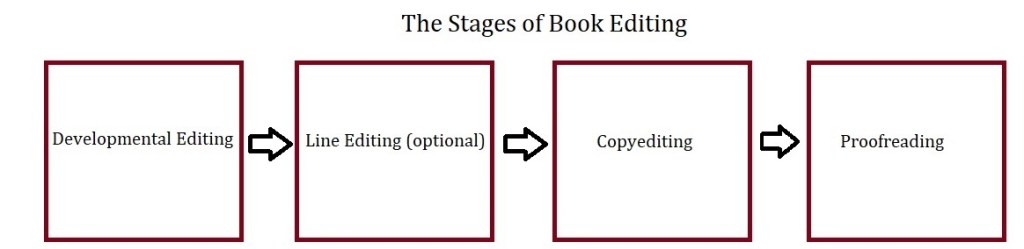
But before taking that next step in publishing your work, it’s important that your work gets edited, whether by professional means or by yourself. This page serves as a guide and a tool to help you make the decision as to what type of editing you need for your manuscript.

Developmental Editing
The first step in the editing process, developmental editing is when an editor studies the big picture of your manuscript and tries to figure out how they can help communicate its plot and ideas in a way that is engaging to the reader. Developmental editing mainly focuses on: genre, characters, structure, theme and point of view.
Line Editing
After the work is developmentally edited, clients can choose to have their work line edited as well. Line editing focuses on the manuscript much more closely at the sentence level. This includes checking for phrasing, syntax, and word choice. Line editing also involves rewriting sentences. If a copyeditor starts rewriting sentences on a larger level than needed, then they are crossing over into line editing instead of copyediting. However, sometimes the job of line editing gets delegated to the copyeditor as well in some publishing houses!

Copyediting
After the line edit is done, your manuscript is ready to be copyedited! Rather than focus on the big picture, copyediting looks closer and checks for clarity, conciseness and consistency throughout the manuscript. However, copyediting does not involve a lot of rewriting unless the manuscript requires a heavy copyedit and the client asks for rewriting. Copyeditors check for:
- Word choice and usage
- Mechanics (grammar, spelling, punctuation)
- Writing style consistency
- Text formatting (capitalization, text size, spacing of font, etc.)
- Clarity
- Fact accuracy

Proofreading
Proofreading is the final stage of editing for your manuscript! Unfortunately, this is also the stage people believe is the only level of editing they need for their work. To have your work proofread means that it has been through the developmental edits, copyedited, and formatted to be printed. This means that proofreading is a last chance to catch any of the errors that slipped through before the manuscript goes to print. Proofreaders look for the same things that a copyeditor looks for, such as missing words, punctuation, typos, design issues and typography.
So, if you are aiming to self-publish your work, how do you know what level of editing it needs? It helps to keep in mind and check for a few things to make that important decision, considering that investing in an editor can cost time and money, and you want your money’s worth for your work.
If you need help in developing your plot and characters to make them more exciting and engaging to the reader? You need developmental editing.
If your manuscript needs help in being more clear, consistent and concise to your reader so that errors won’t throw them off their reading experience? Your work needs copyediting.
If you need deeper help with the syntax, word usage and structure at the sentence and paragraph level? You need a line editor.
If you have gone through most of these stages, have your work formatted and want someone to eagle eye any missed mistakes and design issues? It’s time to have your work proofread!
 Tabby Cat Edits
Leave a comment